
Understanding Frozen Shoulder During Perimenopause and Menopause: A Compassionate Guide to Healing
Understanding Frozen Shoulder
If you’ve recently found yourself waking up with a deep, aching throbbing in your shoulder. For many women in their 40s and 50s, shoulder pain seemingly comes out of nowhere. One day you’re carrying out your daily routine, and the next, simple tasks like fastening a bra, brushing your hair, or holding a cup of coffee feel nearly impossible.
If this sounds familiar, you may be experiencing Adhesive Capsulitis, commonly known as Frozen Shoulder.Frozen shoulder occurs when the connective tissue capsule surrounding your shoulder joint becomes inflamed, thickens, and tightens, restricting motion. While anyone can develop frozen shoulder, women aged 40 to 60—specifically during perimenopause and menopause—are at a significantly higher risk.
You did not do anything wrong, you are not imagining it, and most importantly—there is a clear path to healing and regaining your freedom.
The Hidden Connection:
Why Frozen Shoulder Hits During Menopause
The answer lies largely in hormonal shifts:
Oestrogen and Collagen Production: Oestrogen plays a vital role in maintaining the elasticity, hydration, and overall health of our connective tissues, tendons, and joint capsules. As oestrogen levels fluctuate and decrease during perimenopause and menopause, tissue flexibility drops, making joints more prone to inflammation and stiffness.
Systemic Inflammation: Hormonal changes during this phase can trigger elevated inflammatory responses throughout the body, targeting joint linings like the shoulder capsule.
Sleep Disruption & Muscle Tension: Sleep disturbances, hot flushes, and stress during menopause elevate cortisol levels, causing systemic muscle tightness around the neck, upper back, and shoulder girdle.
When these factors combine, the shoulder joint can react by shutting down its range of motion to protect itself—leading to the classic "freezing" phase.
How Manual Therapy Massage Therapy Can Help
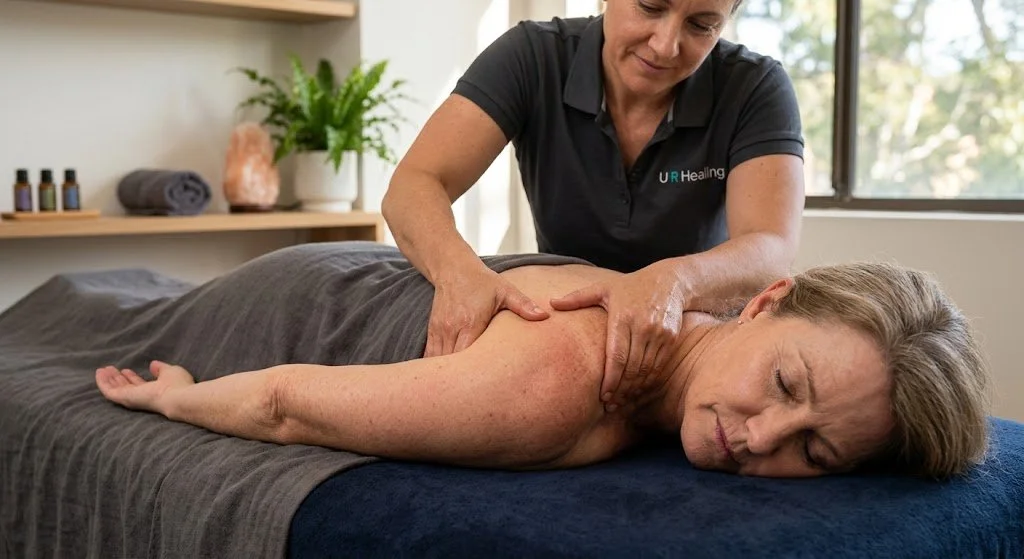
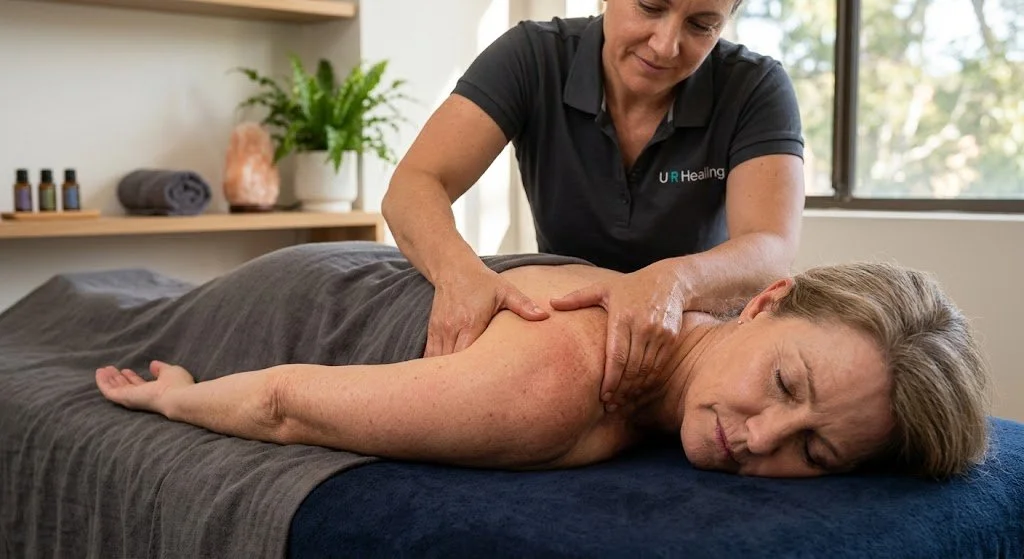
When your shoulder feels locked and painful, it is natural to want to protect it by keeping it completely still. However, targeted, gentle hands-on care is one of the most effective ways to break the cycle of pain and stiffness. Manual therapy, especially specialized remedial massage therapy, works directly with both the soft tissues and the joint structures to guide your shoulder back to health.
Short-Term Benefits: Immediate Relief and Comfort
In the early and acute stages, the primary goal of massage and manual therapy is comfort and pain management:
Interrupting Pain Signals: Focused, gentle soft-tissue massage helps down-regulate a hypersensitive nervous system, calming down sharp pain signals and promoting relaxation.
Relieving Compensatory Tension: Because your shoulder joint isn't moving properly, surrounding muscles—such as your neck, trapezius, upper back, and chest—have to work twice as hard. Massage relieves this secondary muscle tension, offering immediate physical relief.
Improving Local Circulation: Massage techniques enhance blood flow and lymphatic drainage around the inflamed capsule, bringing fresh oxygen and nutrients to tissues while flushing out inflammatory metabolic waste.
Long-Term Benefits: Restoring Mobility & Preventing Re-Injury
As the initial acute inflammation begins to cool down, manual therapy shifts focus toward full restoration:
Breaking Down Adhesions: Through targeted fascia work, myofascial release, and gentle cross-friction techniques, manual therapy helps soften dense scar tissue and adhesions within the shoulder capsule.
Restoring Range of Motion: Combined with passive joint mobilization and gentle stretching, massage helps safely expand your reach—allowing you to reach overhead, behind your back, and sideways once again.
Improving Posture & Movement Patterns: Long-term manual care ensures that as your joint unfreezes, your shoulder blade (scapula) and spine move in harmony, preventing long-term compensation habits and protecting your joints in the future.
Hope for the Journey Ahead
Living with frozen shoulder can feel overwhelming, especially when balanced alongside the other physical and emotional changes of perimenopause and menopause. It’s completely understandable to feel weary on days when the pain feels stubborn.
However, frozen shoulder is a temporary condition. With patience, consistent hands-on therapy, and appropriate self-care, your shoulder will unfreeze, your mobility will return, and you will get your pain-free life back. Be gentle with yourself, listen to your body, and take comfort in knowing that recovery isn't just possible—it is waiting for you.
If you are experiencing persistent shoulder pain or restricted movement, consider scheduling a consultation with a qualified remedial massage therapist or health practitioner to create a personalized recovery plan tailored to your body's needs.